120 Years of Radio – A Voice of Hope Around the World
[Estimated reading time: 5 minutes]
More than 100 years after the first-ever radio broadcast, the technology is still proving relevant for sharing the gospel with TWR.
At the beginning of the 20th century, an impressive race against time began. Many sought to be the first to transmit the human voice through wireless technology, opening the door to an entirely new era: the age of radio.
When discussing who first used electromagnetic waves for wireless telegraphy, two names are repeatedly mentioned: Nikola Tesla and Guglielmo Marconi. Yet it took several more years before Reginald Fessenden achieved what seemed impossible. On Christmas Eve in 1906, he successfully transmitted the human voice and music by radio over a long distance for the first time. The world’s first radio broadcast was born.
Fessenden concluded this historic transmission with the words, “Glory to God in the highest” (Luke 2:14), followed by a Christmas greeting. In doing so, he not only laid the foundation for a revolutionary medium but also made clear to whom he attributed this groundbreaking achievement. Could he have imagined that his invention would endure for more than a century and remain one of the most powerful mediums of our time?
For this reason, UNESCO celebrates World Radio Day each year on Feb. 13. As the organization’s website states, it is “a day to thank broadcasters for the news they deliver, the voices they amplify and the stories they share.”
In a rapidly changing world, technology has advanced enormously over the past 120 years. Accordingly, the 2026 theme for World Radio Day is: “AI is a tool, not a voice.” And further: “Technology alone does not build trust. Radio broadcasters do.”
.jpg) This is precisely where the work of TWR and its partners begins. Like Fessenden 120 years ago, the missions-centric organizations use modern technology to bring God’s Word to people around the world, building trust and offering hope. Radio connects people across borders and reaches places where other media often cannot.
This is precisely where the work of TWR and its partners begins. Like Fessenden 120 years ago, the missions-centric organizations use modern technology to bring God’s Word to people around the world, building trust and offering hope. Radio connects people across borders and reaches places where other media often cannot.
A powerful example of this is in Iran, a country currently experiencing profound and painful change. There, radio waves provide a unique opportunity to reach people who are largely cut off from the outside world. In times of uncertainty, fear and upheaval, many turn to God in search of answers. They are hungry for truth and hope. Through Persian World Radio’s live programming, people outside the country can also send messages into Iran, allowing them to reach friends, family and loved ones an invaluable lifeline in a nation with restricted media freedom.
“Should deeper transformation occur, Christianity could become the fastest-growing religion in Iran,” said Daniel (his name changed for security purposes), who leads TWR’s Farsi ministry. “Because being a Christian is not about religion but about living in a relationship with God through Jesus Christ.”
While radio carries hope across closed borders in countries like Iran, it unfolds its full power in Africa, especially where other media rarely reach. Across much of the continent, radio remains a vital source for information. It bridges vast distances, overcomes language barriers and connects communities.
In conversation with Victor Kaonga, TWR’s international director for East and Southern Africa, it becomes clear how central radio is to everyday life and how transformative it is for people to hear and understand the Bible in their own mother tongues.
Kaonga recounts how a listener in Maputo, Mozambique, thanked TWR for broadcasting God’s Word in his native language. Originally from northern Mozambique and living far from home, the man said the program made him feel at home again. “We receive feedback like this almost every day,” Kaonga explained. “It shows how deeply our programs impact people’s lives.”
One special broadcast in Mozambique, Hope in Hard Times, is designed to reach people in difficult circumstances, offering encouragement, strength and confidence through God’s Word.
Hope and encouragement are also central themes in the work of Samuel Lacho, who oversees radio projects in Central Europe. “In a world often dominated by bad news, we try to uplift people and offer them hope through God's Word,” Lacho said. In the Czech Republic, for example, one program allows listeners to submit questions about their worries or concerns, which are then addressed by a specialist through the lens of biblical wisdom, offering practical guidance for everyday life.
While radio offers direction in Europe, hope in Africa and connection across closed borders in Iran, its unique power is also evident in Southeast Asia. A recent visit from TWR Assistant Video Producer Jade Alger to Indonesia revealed deeply moving encounters with listeners and program creators.
There, programs such as Men of Courage are produced by local pastors who create audio dramas to engage their audiences. One of them draws on the centuries-old Javanese tradition of wayang shadow puppetry. Through stories about the struggle between good and evil, he builds cultural bridges, particularly to Muslim-background listeners, gently leading many toward the Christian faith.
A visit to TWR’s partner FM station BE 107 on the Indonesian island of Batam further demonstrated how sensitive and effective Christian radio ministry can be in a Muslim-majority context. Through contemporary music, life-centered messages and deep respect for religious backgrounds, trust is built: the foundation for meaningful relationships and lasting transformation.
Sharing the gospel, especially by mass media, requires cultural awareness, humility and respect. Only then can a message emerge that touches hearts and changes lives. We invite you to be part of proclaiming this voice of hope around the world by supporting TWR’s Global Media Outreach Fund.
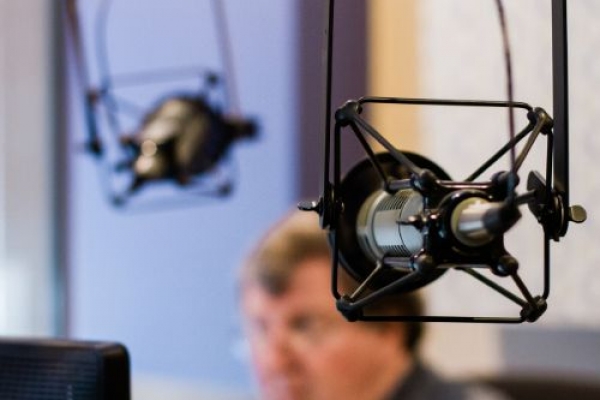
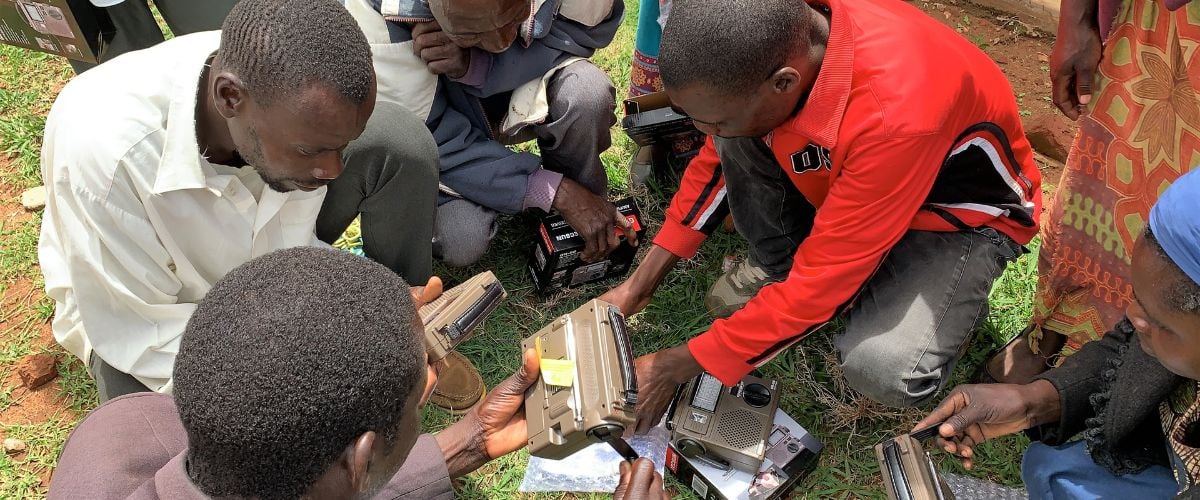
Images: (top, banner) TWR listeners in Malawi gather to distribute radios to those in need, (middle, right) The team for TWR's English-language Mission 66 program gathers in the studio to record episodes together.