Hope Appears Amid Nigeria’s Conflicts
[Estimated reading time: 4 minutes]
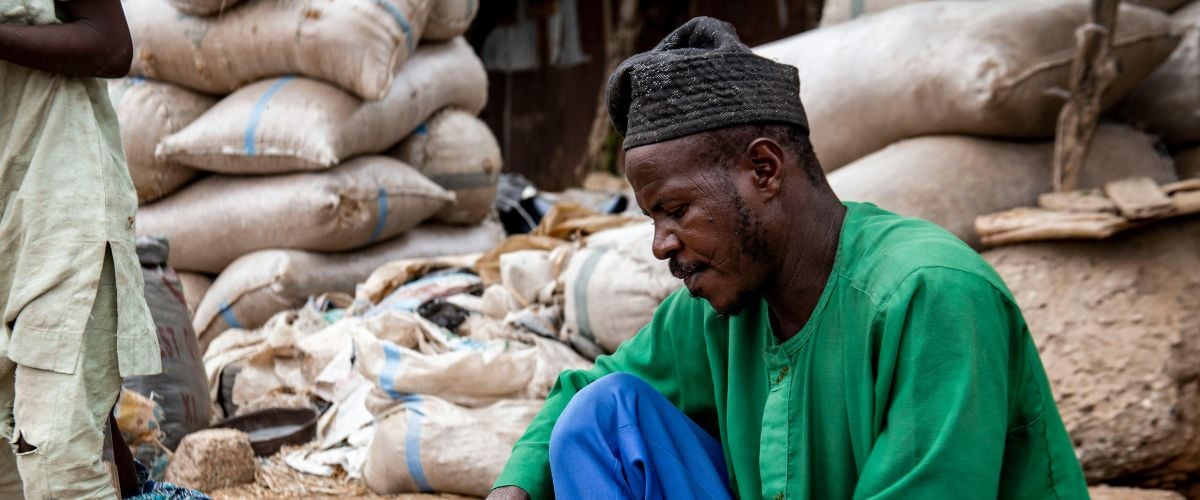
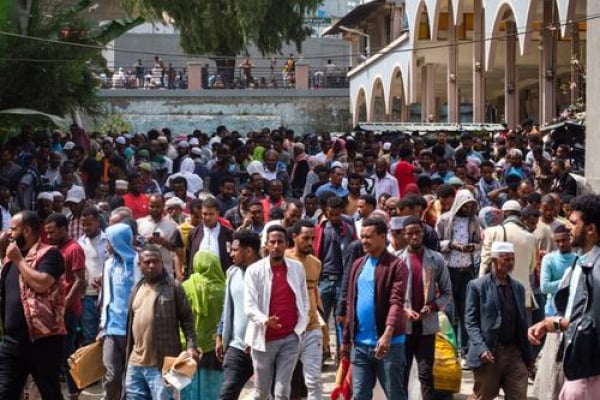
In Nigeria, the most populous nation in Africa, more Christians are killed for their faith than in any other country.
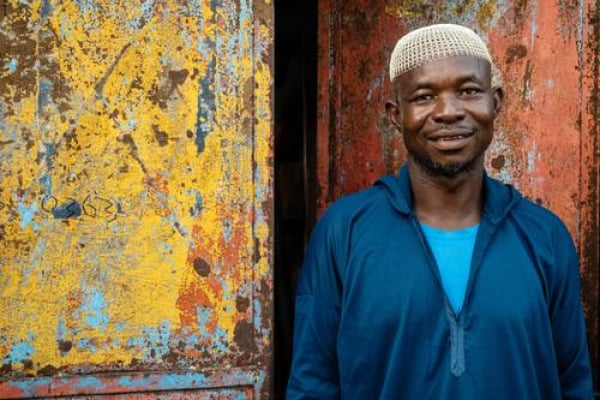
Growing up in northeastern Nigeria, Ismaila Seidu* was trained to recite the Quran and faithfully follow the ways of Islam.
“But deep inside me, I had questions – questions no one around me could answer,” he related. “I wondered about life after death … about forgiveness … about peace.”
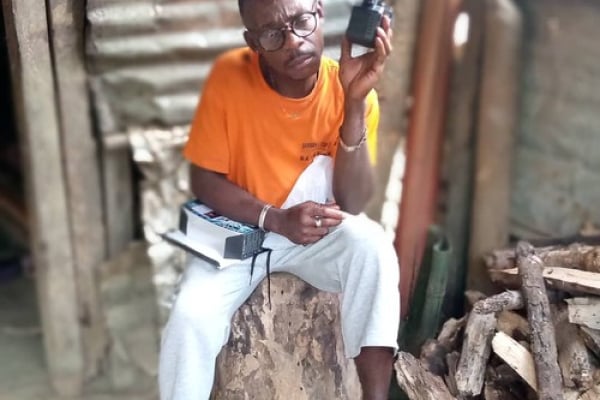
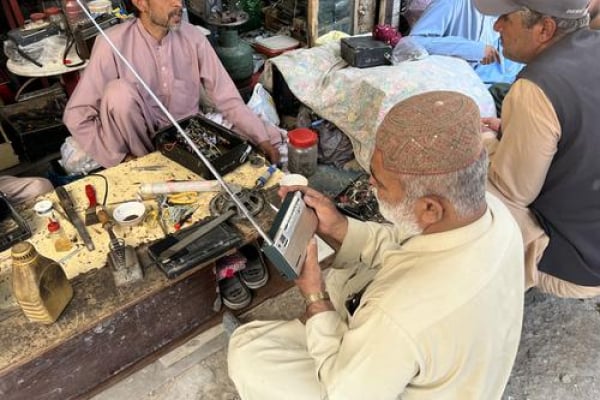
One day, while tuning his radio, Ismaila stumbled across a program called The Way of Righteousness, provided by TWR in his native Fulfulde language.
For Ismaila, hope had begun.
If Christians in the West think about Nigeria, it’s probably in the context of persecution and conflict. They may have heard the report from advocacy group Open Doors that more Christians are killed for their faith in Nigeria than in any other country.
Yet that is not the whole story.
“History clearly shows that Christ’s Church thrives under persecution,” said Wayne Craig, the Africa continental director for Every Man A Warrior (EMAW), the men’s discipleship ministry associated with TWR. “We are witnessing this firsthand through the Lord’s work in Nigeria by the dedicated staff of Trans World Radio and Every Man A Warrior.”
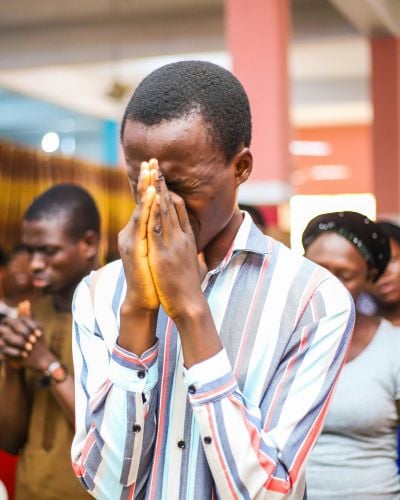 TWR today is beginning a multi-year campaign we’re calling “Hope Within Reach.” It’s about how the hope of Jesus is within reach even in the most devastating circumstances. It’s also about how God is using our media ministry for that purpose – because hope can be as close as a radio dial or a video or a social media network.
Why Nigeria
During the first quarter of 2026, we’re examining how hope is within reach during seasons of conflict.
Nigeria, the most populous nation in Africa and sharply divided between majority Christian and majority Muslim peoples, seemed like a good place to start.
“Every week, there are always attacks on believers,” said Ephraim,* who lives in Kaduna State of north-central Nigeria. “The Christians in the north are living in constant fear for their lives because at the slightest provocation they may be attacked even when they are not linked to the cause of the crisis.”
Religion isn’t the source of all conflicts in Nigeria, Craig said, particularly in the so-called “Middle Belt,” or central, states.
“While it is true that Christians are being targeted for their faith, it’s crucial to understand that the violence also involves atrocities and persecution committed by Fulani herdsmen against farmers,” he said.
The atrocities continued in 2025. In a Nov. 25 statement, the U.N. high commissioner for human rights said at least 402 people – most of them schoolchildren – had been abducted in three Nigeria states since Nov. 17. That included more than 300 children and teachers kidnapped from a Catholic boarding school on Nov. 21.
That came after U.S. President Donald Trump on Oct. 31 designated Nigeria a “country of particular concern” and soon after threatened to send U.S. troops into Nigeria with “guns-a-blazing” to end the “killing of Christians.”
Then on Nov. 26, Nigerian President Bola Tinubu declared a nationwide “security emergency,” ordering the army and police to recruit thousands of additional personnel to combat the violence.
At least in the early going, the measures only seemed to incite more violence, said Joshua Irondi, director of TWR Nigeria.
“While these declarations [were] coming up … the [attacks] somehow began to multiply,” Irondi said. “Many churches have been attacked lately, worshippers abducted into the bush. Some of them get killed. … And it’s been happening in different places.”
Messages of hope
Whatever the cause of conflict, the answer is the same.
“The TWR ministry in Nigeria has intentionally engaged men and women with messages of hope in Christ Jesus,” said Joshua Irondi, who is also director of EMAW in Nigeria.
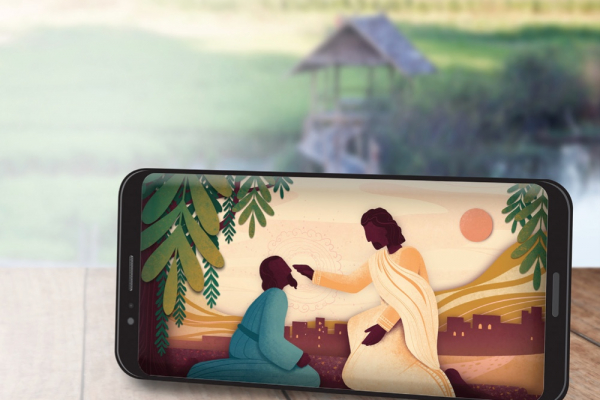
.jpg) Through programs such as The Way of Righteousness and My Story With God, both developed to address the questions of people from a Muslim culture in a country in which that belief dominates the north, TWR Nigeria portrays the hope that comes through Christ alone and does it in the heart languages of Nigerian peoples.
Through programs such as The Way of Righteousness and My Story With God, both developed to address the questions of people from a Muslim culture in a country in which that belief dominates the north, TWR Nigeria portrays the hope that comes through Christ alone and does it in the heart languages of Nigerian peoples.
The programs, which have completed their cycle, were broadcast from TWR’s Oasis transmitter, established in 2020 at the West Africa Transmitting Station especially to reach Nigeria.
TWR Nigeria is introducing new programming in 2026, Irondi said. Production is finished on The Prophets in the Kanuri language spoken in parts of northern Nigeria. The program is designed to show people of other faiths how Jesus was the fulfillment of prophecy.
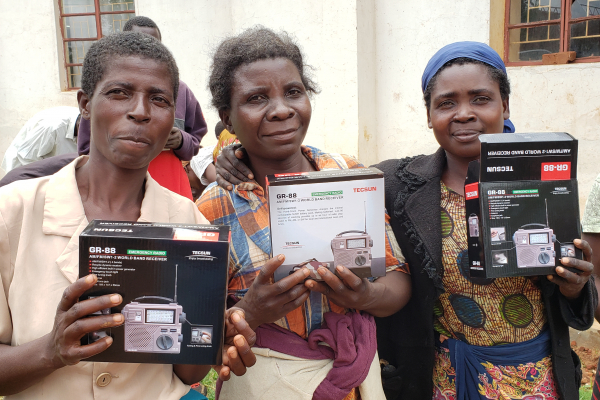
TWR Nigeria also distributes radios and audio devices so people can listen, Irondi said, although they are asking the Lord for resources to increase the amounts.
But TWR Nigeria is doing much more, he said, including:
- Training programs to help believers stand strong for God, even in hard times.
- Taking positive messages and ministry to victims of conflict in internally displaced people camps.
- Reaching out even to hostile listeners. “We have also witnessed situations where people who were potential threats have heard the gospel as well as received ministry materials distributed by TWR and gave their lives to Jesus,” Irondi said.
Everything changed
In fact, Irondi said, there are cases of listeners from places that are most hostile to Christians not only accepting Jesus but going on to work for the ministry among their kinsmen.
Ismaila Seidu, whom we started with, is one such individual.
Week after week, he listened to The Way of Righteousness without calling attention to himself. The messages about the teachings of the prophets, the fall of man and God’s plan for salvation were all new to him, he said. But it made sense.
“One night, I could not sleep,” Ismaila said. “I felt the weight of my sin, and I remembered the voice on the radio that said, ‘Jesus is the way, the truth and the life.’ … I knelt down alone, and I gave my life to Jesus Christ.”
From that day, everything changed, he said. Yes, he was rejected by some, but he was embraced by his new family in Christ.
Ismaila now serves with TWR as a translator and producer in the Fulfulde language.
“I am no longer just a listener,” he said. “I am now a messenger. And I give all the glory to God.”
* For security reasons, we use pseudonyms or first names only of some of our sources.
Sources: David Irondi; email interviews with Wayne Craig, Joshua Irondi; additional material gathered by Joshua Irondi; Open Doors World Watch List.
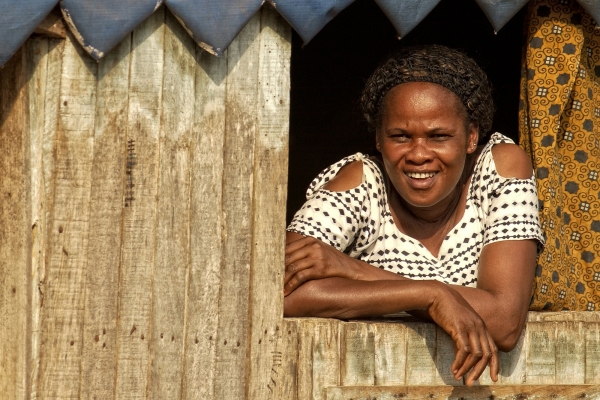
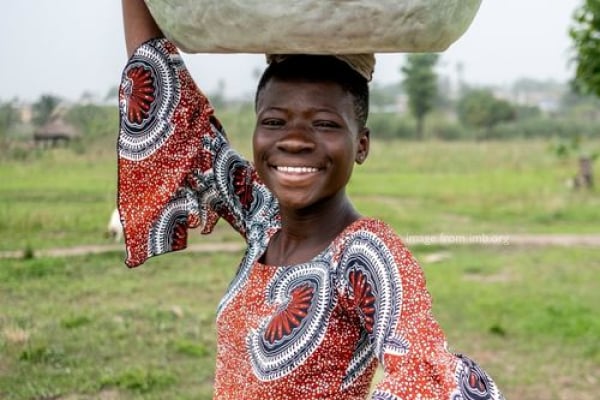
Images: (top, banner) In Nigeria, the most-populous nation in Africa, more Christians are killed for their faith than in any other country, (middle, right) Listed as the seventh-most difficult place in the world to be a Christian, according to Open Doors, Nigeria is no stranger to Christian persecution, (bottom, left) A woman sells produce at a market in Nigeria.